By Bob Cassidy
Life was going fairly well for me in the late 1970s. I was now the Deputy Director of Public Works in Cambridge, Maryland. I was having a ball learning all I could about Rotary, and thinking about buying a home. Another saying I picked up in life is: "Enjoy what you have while you have it," because things can change in an instant. One Sunday evening, my life changed with two phone calls:
The first was a phone call from Bob Dodd, Director of Public Works (my boss), telling me he had terminal kidney disease. He said he had talked with the Commissioners about retiring early to enjoy what time he had left with his family "if" they would continue paying his health insurance. And they decided not to do that. He decided to continue as the Director and let nature take its course. We had a long and difficult conversation the following day. His advice to me was, "You're ready now, Bob, to lead your own department." "You're the guy I'm recommending to replace me, but I don't know when that will be."
The second was from my parents. Dad broke the news to me that my mom had terminal stomach cancer. I was their only child and I was 800 miles away.
Enough said.
That was a one-two punch you never plan on, but more often than not, it happens in life. It was one of the darkest days of my life, but one I had to deal with alone. Rotary was still there, but by now it was in the distance.
What followed was a lot of resume writing, job interviews, and going back to Rhode Island to be with Mom. I received two Director's job offers. One was from O'Fallon, Missouri, and the other was from Claremont, New Hampshire. Since Claremont was a heck of a lot closer to Rhode Island than Missouri, I accepted the one in New Hampshire. And one blustery January weekend, I made the move to Claremont. News travels quickly in a small city, and within a month, I received a visit from the President of the Rotary Club of Claremont with an invitation to join the Claremont club for lunch. If one club writes a letter to a club where one of their members is moving, that club is sort of obligated to accept him/her into their club. So, to make that story short, before I knew it, I was a member of the Claremont, New Hampshire Rotary Club. They met in the Elks Lodge, and lunch was catered by a Terman Caterer (by the way, that man knew how to cook).
At that point, I thought I knew quite a bit about Rotary, but little did I know my understanding of Rotary wasn't even getting warm yet. My first lesson in how little I knew happened at the first lunch when I proudly announced I was the mashed potato king! They (all 82 of them) looked at me like I had three heads. Very quickly, one of them said, "So what?" So I said, "I can help with the Thanksgiving lunch!" "What Thanksgiving lunch?" You've got to hand it to me; when I step into it, I go all the way into it. I was politely informed there was no Thanksgiving Lunch for the needy in the Claremont, NH Rotary club. Their big things were putting on a summer circus (we contracted with a traveling circus for a percentage of the profits) to raise money for their charities, and finding host families for Rotary Youth Exchange students. I also got my first Rotary Foundation question. "How come you are not at least a sustaining member of The Rotary Foundation?" My conclusion was that I had a lot to learn about Rotary and decided to change my approach by following my dad's advice: "Bob, you'll never learn anything with your mouth open."
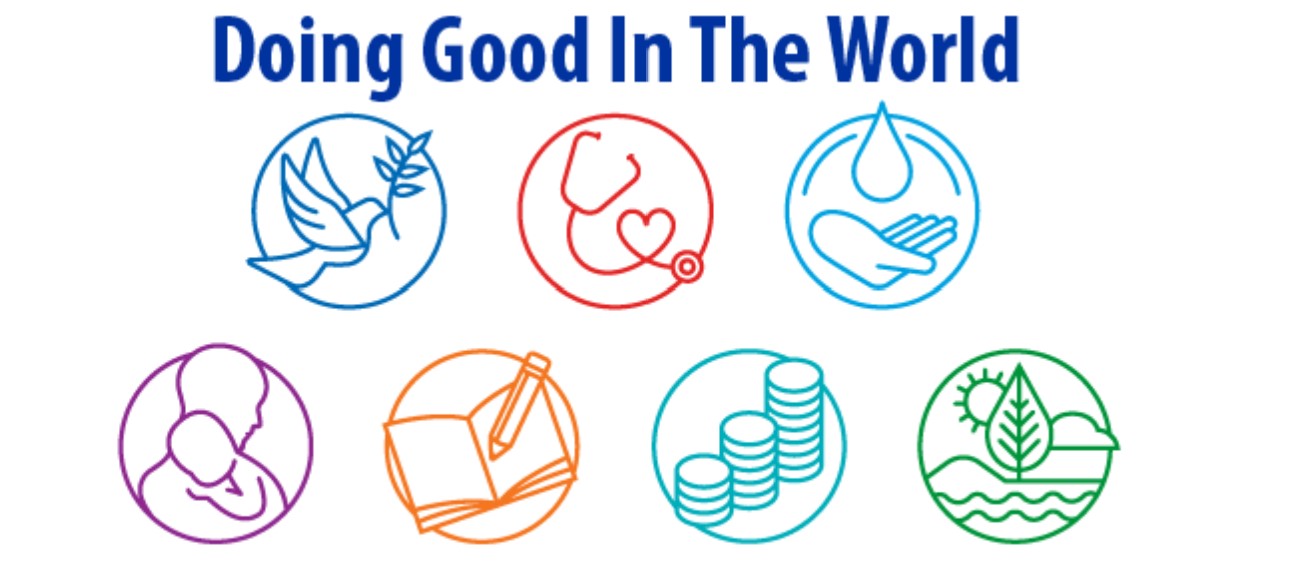 I spent the next two years learning more about Rotary and The Rotary Foundation than I ever thought possible. While I was learning about Rotary, I discovered it was broken into Four Avenues of Service. Today, this has been expanded into The Seven Areas of Focus. Did you know:
- Rotary was the first service organization?
- Rotary is the only service organization in the world to hold a seat at the United Nations?
- The Rotary Foundation carries a four-star out of a possible four-star rating with Charity Navigator and has held that rating for the past 14 years?
- The Rotary Foundation raised $434 million dollars last year and over $3 billion dollars since its inception in 1917? (The initial gift was $26.50 – the surplus from that year's convention.)
- Rotary funds most of its projects through The Rotary Foundation?
- Did you know the Foundation's first project was a public outhouse in downtown Chicago? Do you know why? I do. It was so the merchants in downtown Chicago could keep the ladies of Chicago in their stores shopping without having to go all the way home for a bathroom break.
- The Rotary Foundation gave out 1879 grants in Rotary's fiscal 23/24 fiscal year?
I could go on and on about the literally thousands upon thousands of local and international projects the Foundation funds EVERY YEAR! I was dumbfounded! Take a look at the Rotary Foundation's FY 23/24 annual report for the details. You can't do everything, but you can do something. If you're willing to put the effort into it, are willing maybe to be the champion of something you are passionate about, you may be capable of doing more than you think.
If you stay in Rotary long enough and are active, you cannot help but meet some fascinating people. I have, and now call them... FRIENDS.
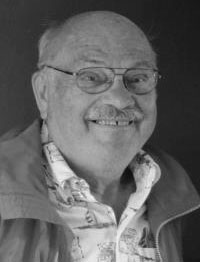
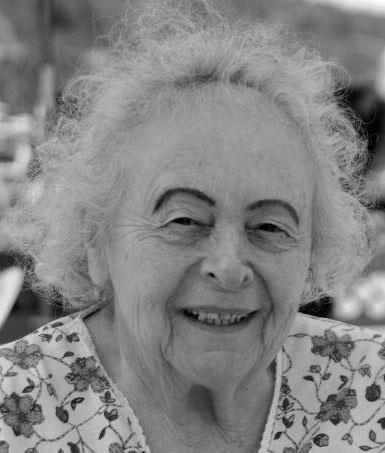 My first such encounter with such an individual (actually it was a couple) was through Rotary's Youth Exchange Program. In this part of the Rotary World, it is called ESSEX (Eastern States Student Exchange Program). He/they were Arthur A. Clough and Delphine Clough. For all intents and purposes, they were ESSEX in New Hampshire. As the years passed, I knew I could count on Art and Delphine for support to handle problems that came up with the inbound kids during the year and finding New Hampshire kids to fill the outbound slots. Little did I know our paths would cross again in the years to come.
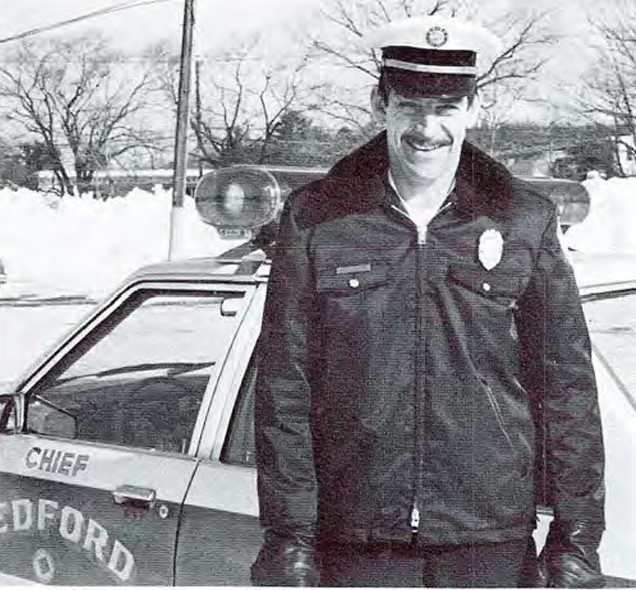 Another person from Claremont, NH, who had a profound impact on my life was William "Skip" Sullivan, Claremont's Fire Chief. What did he have to do with Rotary? Plenty. Skip and I hit it off right away and became good friends. That relationship lasted quite a few years. Skip was a key factor in my making the most important decision (other than marrying my wife) of my life. What exactly did Skip do? You'll have to wait for the next article for the answer to that question.
If you missed part 1 of Bob's story, you can read it here.